
Pricing & Discounting Profit Calculator
See What a Price Change Really Does to Profit
When sales soften, most business owners do one of two things:
They avoid increasing prices because they are worried customers will leave.
Or they discount to win more work and get cash in.
Both reactions are common.
Neither tells you what happens to profit.
This calculator shows you exactly what changing price and volume does to gross profit, so you can make the decision with your eyes open.
Before You Discount, Run the Numbers
A sale can bring work in quickly.
But discounting does not just change revenue.
It changes margin.
It changes buffer.
It changes how much room your business has to absorb normal problems.
That is the part most owners do not see clearly until later.
This tool helps you test things like:
a 5%, 10% or 15% price increase
a percentage-off sale or promotion
winning more work at lower margin
losing some volume at a higher price
whether “getting busy again” actually improves the business
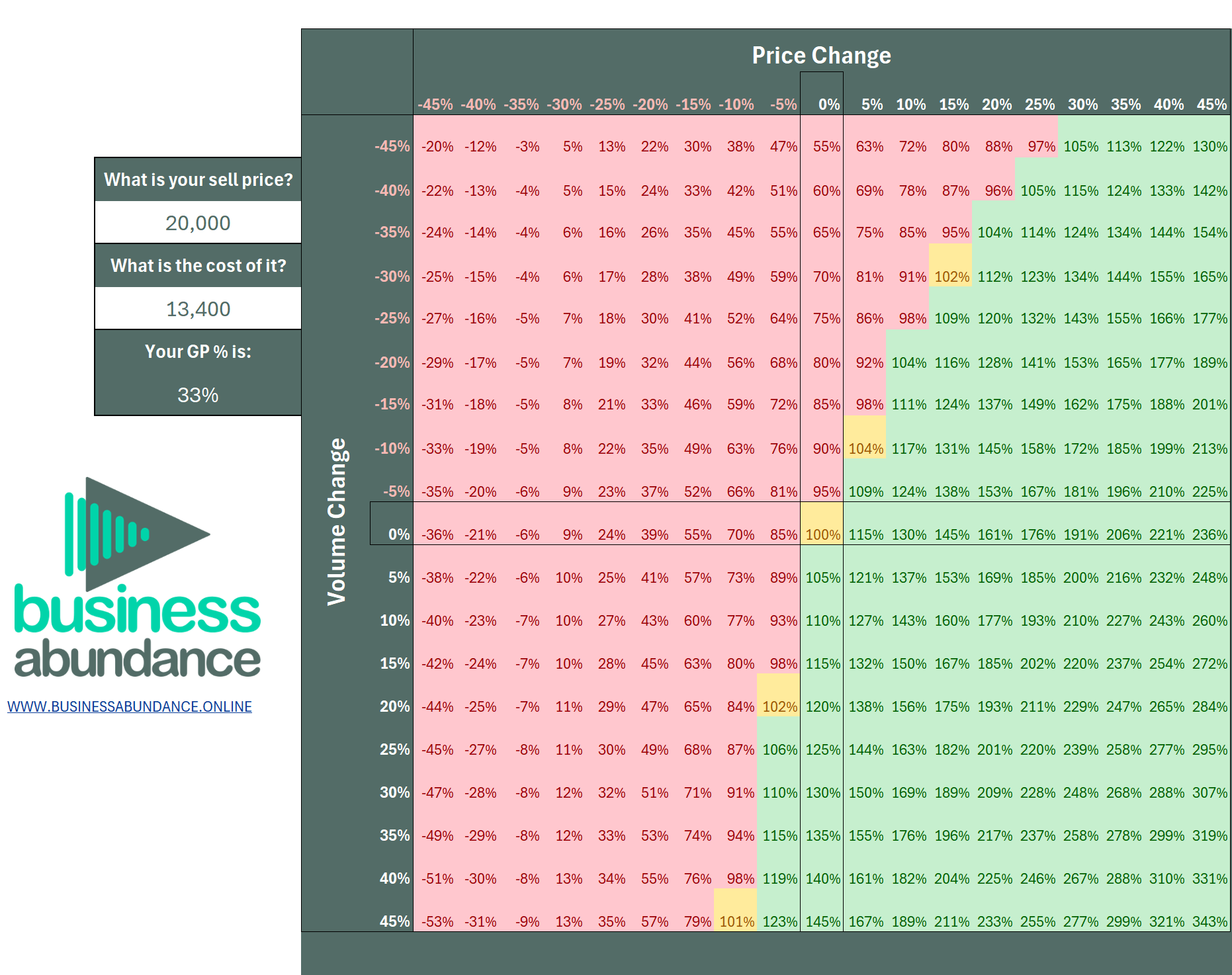
What the Calculator Shows
Using your actual numbers, you can see:
what a price increase does to gross profit
how much volume you can lose and still be ahead
what discounting really costs
how much extra work you need after a sale
why more sales does not always mean more profit
The horizontal axis shows change in price.
The vertical axis shows change in volume.
The percentages in the chart show the change to gross profit.
Simple. Practical. Useful.
Why This Matters
Small movements in pricing create disproportionately large changes in profit.
For example:
increase prices by 10% with roughly a 33% margin, and you can lose around 25% of customers and still make about the same profit
drop prices by 10%, and you may need around 45% more work just to maintain the original profit
That is leverage.
And it is why “we just need more customers” is often the wrong first thought.
Sometimes you do not need more customers.
You need more contribution per customer.
The Discounting Trap
When things feel uncertain, owners often grab the lever that moves fastest:
more work
That usually means:
discounting
saying yes too quickly
filling the calendar
focusing on revenue instead of margin
It can feel like relief in the short term.
But if you buy work by discounting, you can create a business that is busy and weaker at the same time.
That is what this calculator helps you avoid.
A Quick Example
A business owner was hesitant to increase prices because they were worried clients would push back.
We modelled the numbers.
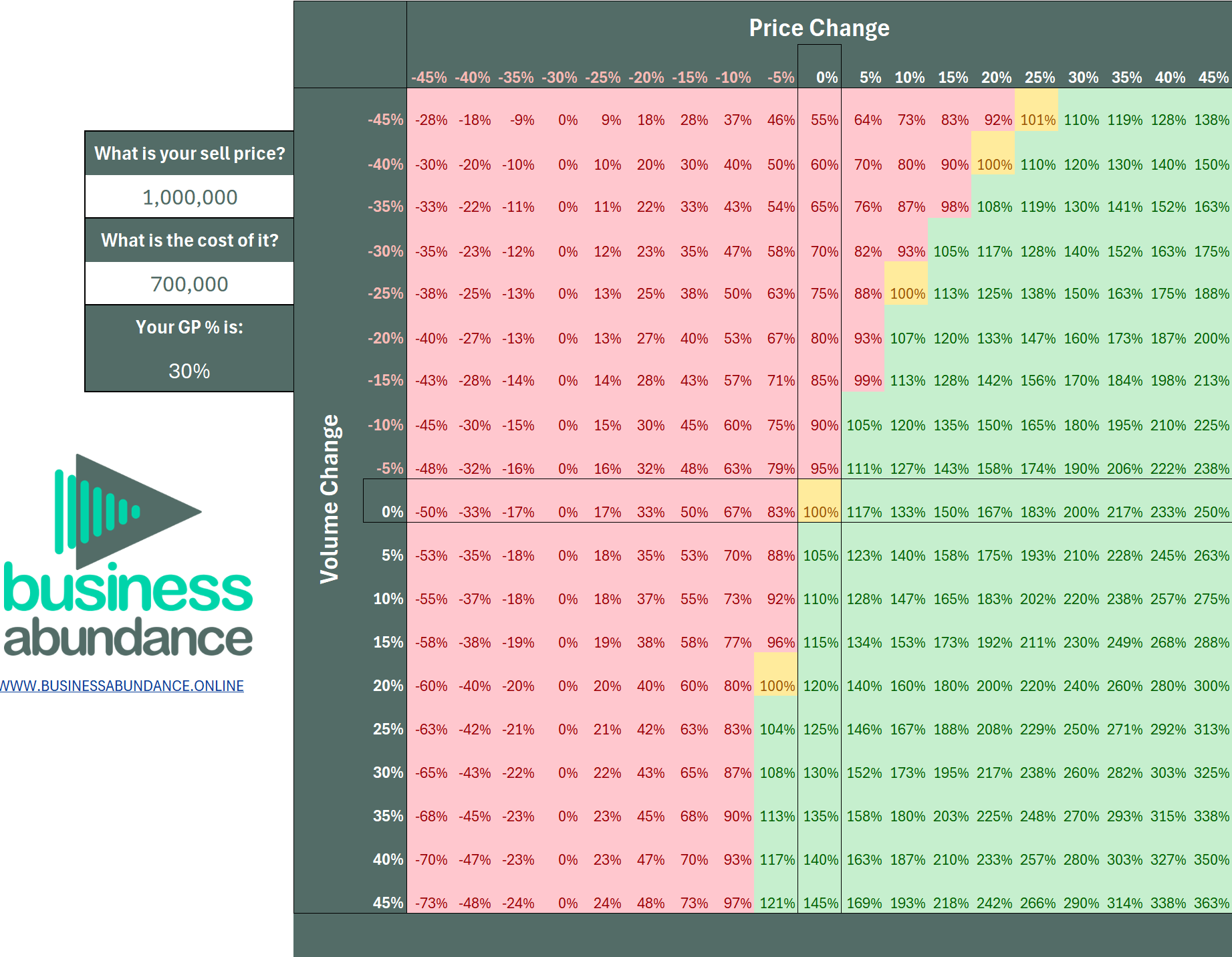
Original position
Revenue: $1,000,000
Cost of sales: $700,000
Gross profit: $300,000
Expenses: $250,000
Net profit: $50,000
After a 10% price increase
Revenue: $1,100,000
Cost of sales: $700,000
Gross profit: $400,000
Expenses: $250,000
Net profit: $150,000
Same business. Same overhead. Very different result.
Then we modelled the fear scenario.
After a 10% price increase and 20% loss of clients
Revenue: $880,000
Cost of sales: $560,000
Gross profit: $320,000
Expenses: $250,000
Net profit: $70,000
Still better than the original position.
That is the point of modelling.
Not to predict perfectly.
To stop letting untested fear drive pricing decisions.
Who This Is For
This calculator is for business owners who:
are thinking about increasing prices
are considering a sale or discount
feel busy but not profitable
want better visibility before making pricing decisions
want to understand the trade-off between price, volume and margin
Watch the Explainer Video
We have recorded a short walkthrough showing you how to use the calculator and how to read the chart.
Download the Calculator
Use your own numbers and see what the decision actually does to profit before you make it.
Want More on Pricing Strategy?
If you want the broader thinking behind pricing, value, market positioning and why competing on price usually creates pressure on margins and sustainability, read our Pricing Strategies article here.
Read the Pricing Strategies article
You can also reference your podcast episode #29 What are You Worth? Pricing Strategies for Small Businesses, where you discuss value-based pricing, market-based pricing, and why dropping prices can quietly hurt the business.
Final Thought
More work does not always fix the problem.
Sometimes the fastest way to weaken a business is to get busy at the wrong margin.
Before you discount, increase prices, or run a promotion, run the numbers first.